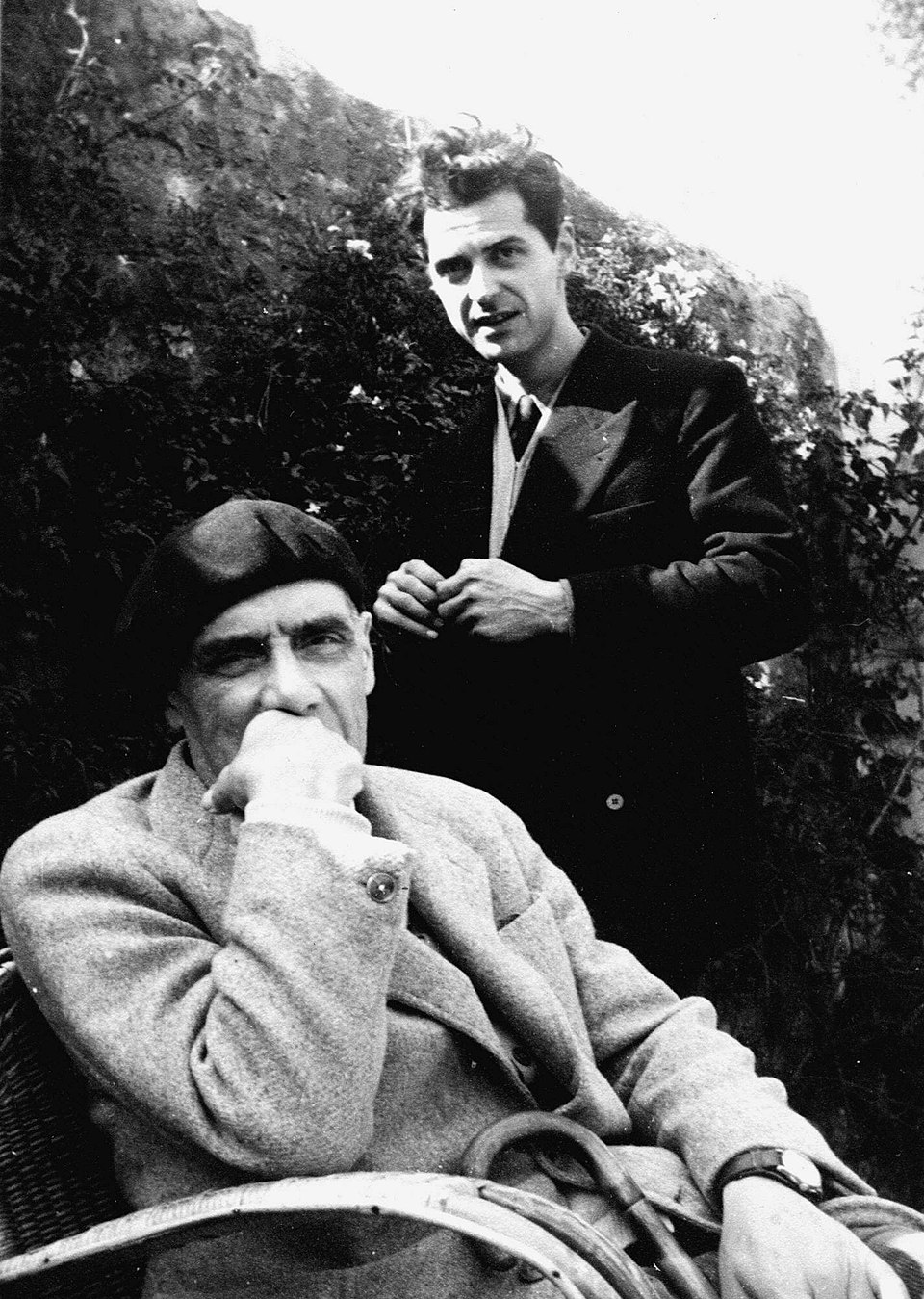
photo Otto Snoek
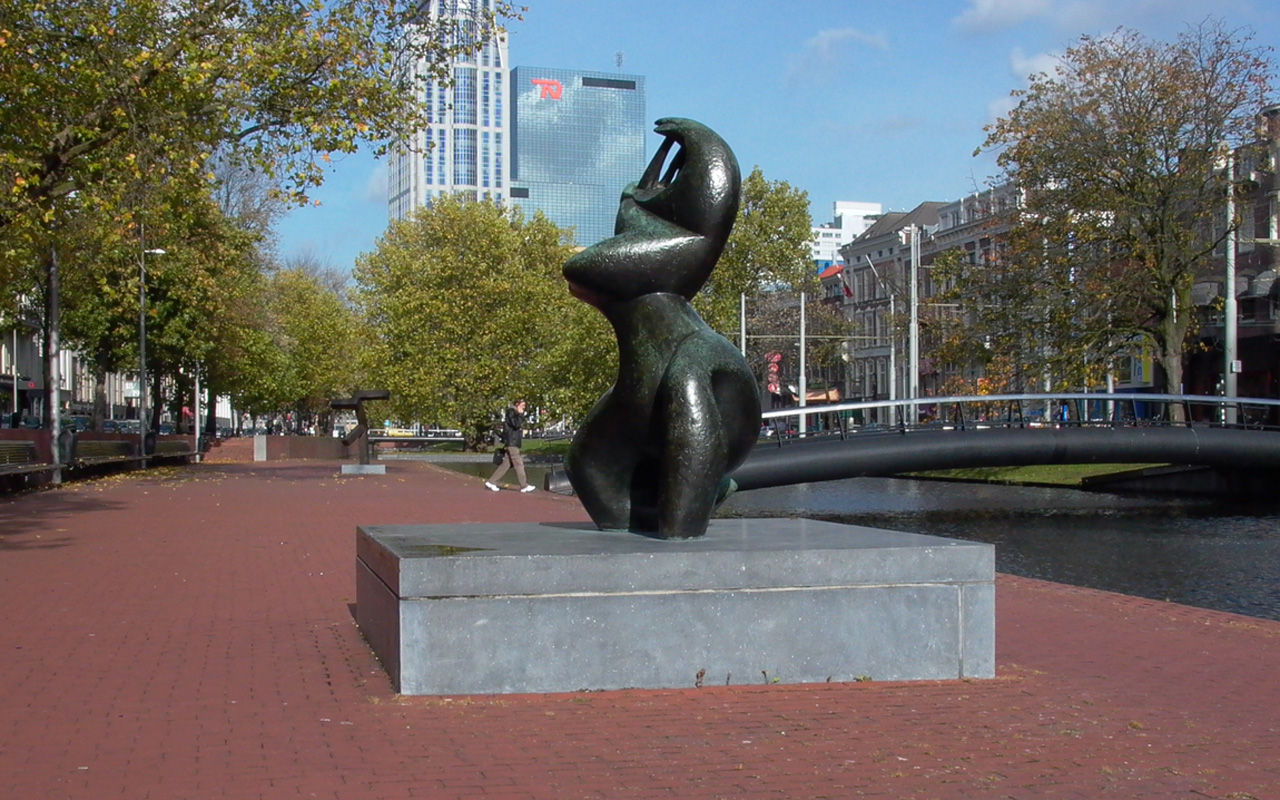
photo BKOR archive
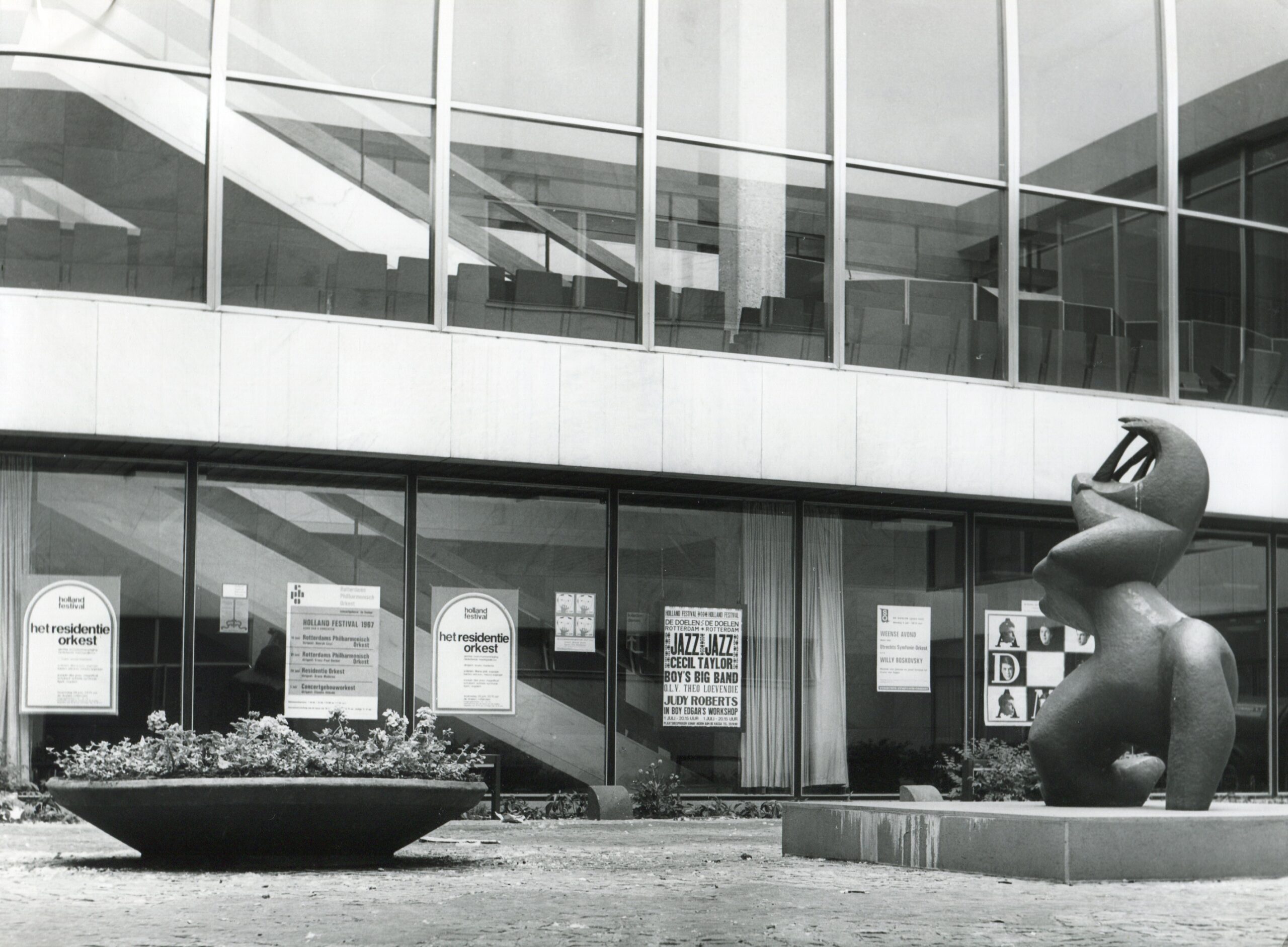
photo Gemeentewerken Rotterdam
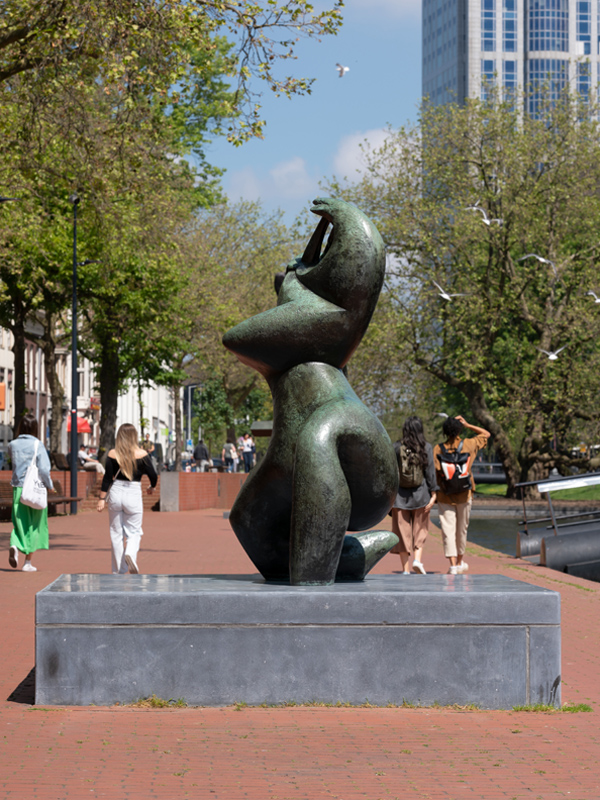
photo Jannes Linders
The artwork
La grande musicienne by Henri Laurens represents a kneeling woman playing a lyre. Laurens made the original plaster sculpture in 1938. The bronze version, which is part of Rotterdam’s sculpture terrace, was cast in 1963. It is now seen as a key work in the artist’s oeuvre and an important example of early cubist sculpture.
Looking at the sculpture, it is clear that in 1938 Laurens had already abandoned a strict cubist approach and had adopted a more lyrical style. In this sculpture he is no longer concerned with simultaneous representations of various viewpoints or components but with rearranging forms and allowing them to flow, and with the sculptural tension evoked by the heavy sensuous forms. All the forms flow into one another: from the generous curve of the hips, the sickle form of the arm, and the strings of the lyre, to the point of the elbow. It is only in the back that we encounter a deep groove that delineates the left and right sides. The back forms a central fulcrum around which the other elements turn. This movement invites us to examine the figure from all angles.
The sculpture was cast with the utmost care. The surface is smooth and has a dark, which optimise the even reflection of light.